Showing posts with label Random Records. Show all posts

Sunday, March 27, 2016

Random Records - 4. The National - "Boxer"


The National
Boxer
2007
Beggars Banquet
(obtained from Amazon)
Best Song: "Gospel"

Another look at a random record. As warned with earlier essays, these ramblings could have very little to do with the album selected. Rather, the record could act as a springboard to other ideas, which this essay very much does. 

As a lover of popular music, for lack of a better term, I can look back at several milestones in half of a lifetime of listening, collecting, and reviewing that have served as monumental shifts in my experience. Some that stand out include my first vinyl record, my first CD, the change in taste from Top 40 to “alternative,” first concert, first iPod, etc. I can’t rightly say that all of these shifts were for the better, but there’s no denying they happened. The waves of technology and progress are but segments of an undimmed tide that either push one to the next shore or further out to sea.

Though The National’s 2007 album, Boxer, was not necessarily the one album that signified the shift from CD to download for me, it was and is a symbolic artifact of what was lost in the shift. While we at one time lamented the loss of the majesty of album cover art that was 12” x 12” with the oncoming of at first cassettes and then CD’s, I heard very little about the loss of liner notes and especially lyrics with the jump from CD’s to digital downloads. Additionally, as with most other consumable media, music became an à la carte concern.

Let me tackle the latter part of that first. I recently had a discussion with a friend about albums, and the time we used to spend with particular albums, to the point now at which we will hear a song on one of our devices and have been conditioned to hear the next song from the album follow close behind. For instance, I cannot hear Prince’s “When Doves Cry” without expecting to hear “Take Me With U” directly after. There are hundreds of albums I have experienced in this way. We don’t have that same kind of experience with music. I don’t know if that’s a good thing or not.

On some token, songs are taken in individually and assessed on their own merits. On the other side of that argument, we have to consider the purpose of albums. Are these songs meant to be taken in as a larger piece of singular art, or are they just songs recorded at one time and presented in a conglomerate without much thought? I’m sure we can think of albums that can be put into one camp or another. Boxer is, in my mind, the category of a larger piece of singular art. All of the songs fit together thematically, lyrically, and sonically. Listening to the album in sequence brings me back to my childhood and those giddy expectations of when a particular song would be telegraphed by the end of another.

Additionally, I used to be able to memorize every song title in my collection of physical albums. I used to know, say, that the Smiths song that everyone loved was called “How Soon Is Now?” while many of the digital downloaders who hear it think sometimes that the song is titled “I Am Human.” I used to know that the last three words in Simple Minds’ big hit, “Don’t You (Forget About Me)” were parenthetical. (I guess I still do). I used to know that the Who song was “Baba O’Riley” and not “Teenage Wasteland,” that it was “Space Oddity” and not “Major Tom.” But, maybe that’s just a case of being a nerd and not really of having physical artifacts of music. I can’t help but think, however, that perusing the tracklisting and liner notes added to the experience.

This brings us to the nature of the loss of lyrics. But wait, you’re saying, what about all of those lyric sites on the Internet? Yes, what about them? They are crowdsourced, like a lot of things that probably shouldn’t be, and therefore are wrong more often than not. For decades, we have been getting lyrics wrong, but at least we often had lyrics printed on the inner sleeves of records to settle arguments and gain clarity. We all have our own stories of mistaken lyrics, from the funny misunderstandings to the ones that you heard for years, only to reject the actual lyrics because they don’t match your collective experience and connection to the song. But then there are some that just don’t make sense. Another friend recently mentioned something about that “Captain of Trees” song. Needless to say, I was dumbfounded. “Captain of Trees”? It turned out that he was referring to a-ha’s “Take On Me,” and was mishearing the lyrics “in a day or two.” In his defense, Morten Harket’s voice reaches a note that makes lyrics difficult to decipher during that line, but “Captain of Trees”? Another time, a student, perhaps inappropriately, pointed me to a YouTube video that interpreted a line from Jay-Z and Alicia Keys’ “Empire State of Mind” (“where dreams are made of”) as “wet dream tomato.” These are ridiculous examples, but sometimes the misheard lyrics make some bit of sense, such as when a good friend thought that “Voices Carry” by ‘Til Tuesday found Aimee Mann singing “Hush hush / Keep it down now / This is scary.”

The combination of these lost elements led me to have a singular experience with Boxer. I first heard the album digitally, did not pay attention to the song title display, and listened to a song with a lyric that I found odd, but intriguing. I had a small obsession with the song and the strange lyric:

“Your mind is racing like a pronoun,
Oh my God, it doesn’t mean a lot to you,”

I had yet to see that the song title was simply “Racing Like a Pro” and that the real lyric was “Your mind is racing like a pro now.” I imagined that because pronouns are shorter than the nouns they are replacing, that they tend to help people race through sentences. I imagined that it had a link to the next sentence with two simple pronouns of “it” and “you” as well as a personal pronoun of “my.” I started trying to deconstruct the song and that lyric specifically. What was the “it”? Was “it” the aforementioned “mind”? Who was the “you”? Is it “me”? Is it someone else? Why are the pronouns racing? I can’t say I got anywhere meaningful, but I really liked the sound of it. I really liked the idea of parts of speech being able to have lives of their own. Once I bought the album on vinyl, I couldn’t decide whether I was disappointed in the actual lyric or disappointed that I had allowed myself to be misled for as long as I had because of the nature of digital music.

Since that time, vinyl has seen a resurgence in popularity for those aficionados who either prefer the sound, the collectability, the aesthetic of the artwork, the lyrics, the sequencing of songs, or perhaps a combination of any of the above. That’s not to say that vinyl is for everyone. Plenty of people are just fine with listening to songs as disparate units without any connective tissue or tangible ephemera. I am hoping that with vinyl, I can once again make those deeper connections with my favorite music, and gain back what was lost with the onset of downloading.


I haven’t written much about the nature of Boxer and its music, but that wasn’t the intention here. It will suffice to say that I love this album, that it is my favorite album from The National, and that I highly recommend these songs as some of the most gorgeous examples of somewhat more meditative anthemic rock out there. While Alligator may have brought The National to my attention, Boxer gave me the knock-out punch, making me a lifelong fan. But, there I go, racing like a pronoun again…

Friday, March 11, 2016

Random Records - 3. Depeche Mode - "Music for the Masses"


Depeche Mode - Music for the Masses
1987
Sire Records
(acquired at Silver Platters in Northgate)
Best Song: "Never Let Me Down Again"


My students claim I’m a hipster. They may be right. It’s easier to just acquiesce to their perceptions than it is to provide a cohesive refutation. Do I listen to a lot of music that my students have never heard? Sure. Do I try to dress well? I try, though I always think I can do better. Do I collect vinyl? Well, since that’s what these articles are all about, yes. There are a lot of stereotypical hipster activities in which I do not take part, but in the eyes of my students, I am, and therefore I have resigned myself to that fate. I remember playing a song for my class by the Scottish band Frightened Rabbit, and having all of them stare at me in confusion upon telling them the band’s name. Is it that I listen to weird stuff, or is that they are 17 and have a limited perspective? I'll let you decide. 

As a music connoisseur, I have a list of bands in my accessible memory that could easily be considered “the bands I hold in high esteem.” They may not be my favorites, but they are ones that I respect, admire, and understand their gravitas in the rock canon. These bands have grown on me over time. The Velvet Underground, Bob Dylan, Nick Cave, Bruce Springsteen, and Sonic Youth are all artists that grew on me over time. But, are these the bands that I look to first when selecting a record with which to unwind? Not usually.

The records I look to first are those that had a significant impact on me in my formative years. The records I look to first are those that moved me emotionally. The records I look to first are those that came from bands that shaped my eventual fledgling tastes in music that would stay with me for the rest of my life. So, when Music for the Masses by Depeche Mode came up as the third random record in my ongoing survey, I was immediately transported back to a time when music was not just a distraction or background noise. I was teleported to a time when music felt as much a part of my life as breathing.

Every day at my school, I see kids wearing headphones. There are the kids with the over-ear headphones, blocking out the rest of the world: hallway warriors creating their own private worlds. I see kids with earbuds hanging out of the inside of their shirt collars like uncut store tags, or draped over their ears as reminders that their music is still physically close to their aural cavities, despite their being inert. The teacher I am shakes my head at their inability to distance themselves from their devices. The nostalgic teenager in me connects with them on a level I didn’t expect, remembering the music that was so much a part of my life in high school.

One of the albums that will be forever cemented in my teenage years is this sixth album from Depeche Mode. Released just two days before my 16th birthday, it pressed all the buttons of my teenage psyche. From the betrayal of friendship in “Never Let Me Down Again” to the Nietzschean nihilism of “Nothing,” DM played to both the young adult fantasizer and the burgeoning thinker. Though I will often rightfully claim that Violator is Mode’s best album, Music for the Masses is that rarest of albums, the one that made an impression in a particular time and a particular place. While there are plenty of touchstone books and movies that appeal to the mind being transformed from adolescent to nascent adult, this is one of the few albums I can pinpoint as being transformative in my youth.

With this album, Depeche Mode challenged my ideas of sexuality. I wondered if singer Dave Gahan and main songwriter Martin Gore had a relationship beyond just bandmate or friend after hearing “Never Let Me Down Again.” There was just something about Gore’s plaintive background vocal of “See the stars, they’re shining bright / Everything’s alright tonight” that made me think there was more to that union. I wondered what “Strangelove” really meant. “Master and Servant” was a bit more on the nose, but this song made me contemplate different forms of relationships. “Little 15” was borderline creepy, and it would be quite a few more years until I would read Lolita, but I am still not sure I am fully understanding the impetus of this song.

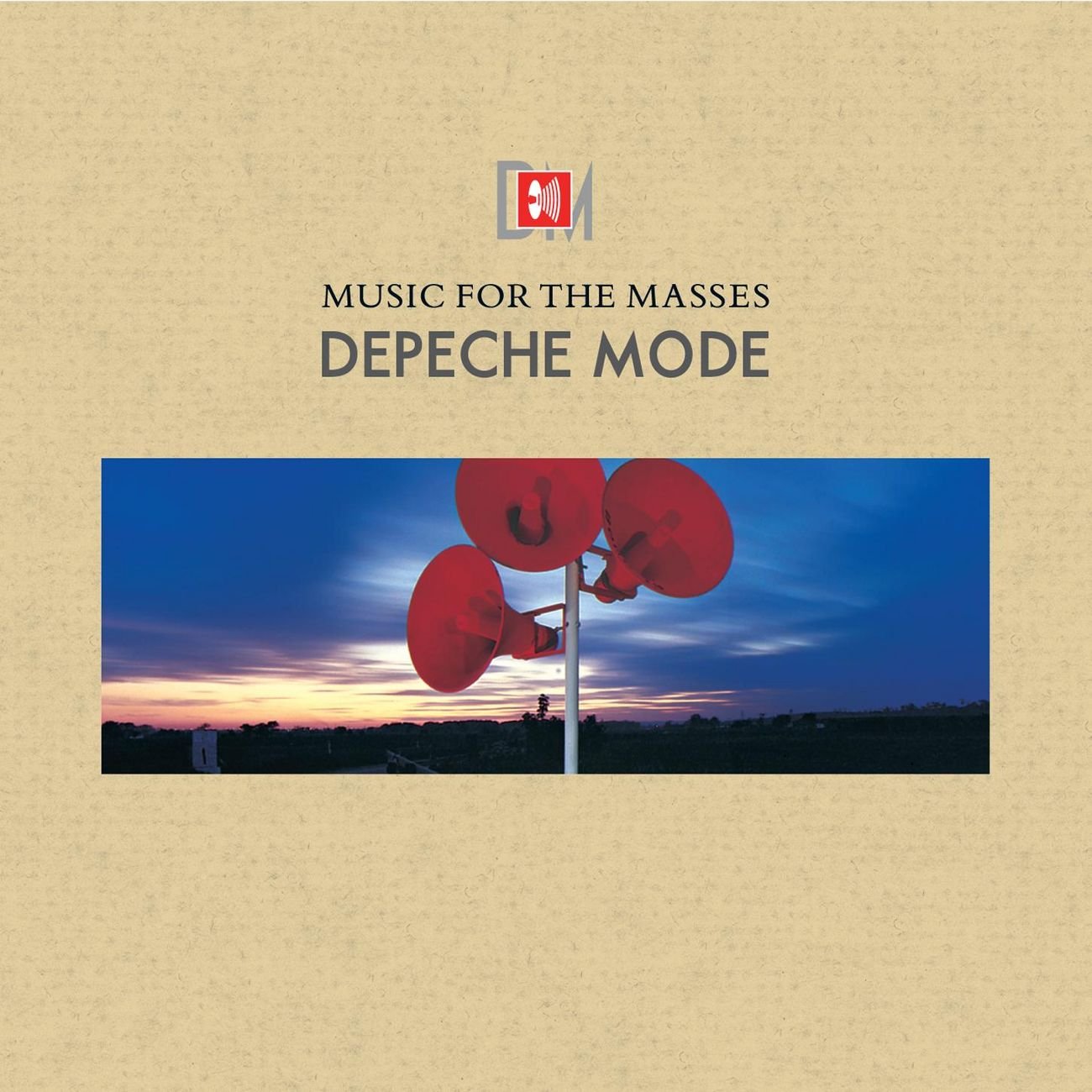
With this album, Depeche Mode challenged my ideas of imagery and longevity. Before the album was released, “Strangelove” was released as a single a few months prior. The record had a close up image of a red speaker with the letter G and the number 13 dominating the space. As time went on, I saw the speaker motif repeated through other single releases as well as the album release. I came to realize that the G 13 was part of “Bong 13” and that DM had been numbering each single with a kind of internal “catalog” number. This immediately appealed to the collector in me that would be tempted to then fill in the rest of the catalog to be “complete.” I loved everything about the construction of the concept. And this brings me back to the idea of my being called a hipster.

To this day, I am not sure whether or not Depeche Mode is a hipster band. I have friends who I could argue are more “hipster” than I am who revile them. To these friends, DM is the Coldplay of our generation. They may be right. I don’t think I have the proper perspective to judge. I think DM are a bit more artistic, creative, and daring than Coldplay, but I am too close to it. Some may think of Depeche Mode as one of those “alternative radio” bands that never hit the mainstream in a way it really could or should have. Some may think of them as being one of the biggest bands of the 80’s and early 90’s, selling out huge arenas in the wake of this album. Their documentary film, 101, shows a sellout crowd at the Rose Bowl, one of the highest capacity venues in Los Angeles.

Considering the title of the album, this is exactly what Depeche Mode was trying to do. They wanted to appeal to everyone. This was indeed an attempt to create “music for the masses.” Amazingly, they never had a US or UK number one hit. They hit on the alternative and dance charts, but never on the mainstream pop charts. So, were they a hipster band or a mainstream, sellout band? Or something else entirely? Though there are some bands from my youth that I may consider a “guilty pleasure,” Depeche Mode is not one of those bands. I will always revere their music, seeing it not only as an expression of sheer joy, but also as a reminder of sixteen-year-old me, a hallway warrior, mouthing:

“What am I trying to do?
What am I trying to say?
I’m not trying to tell you anything

You didn’t know when you woke up today”

Sunday, January 10, 2016

Random Records - 2. Big Star - "Radio City"


Big Star – Radio City
1974
Ardent Records
(acquired at Silver Platter's in Northgate)
Best Song - "September Gurls"

In our collective brief window of existence, we all look for some kind of meaning. Some find it in work, others in family. I teach writing because I believe that some of us want to shout into the universe and have that shout echo throughout time. Though that echo may be short lived, and though it may diminish with distance, writing is a permanent expression of humanity, a form of communication that can carry one’s thoughts, perceptions, realizations, epiphanies, and opinions to those who may not otherwise get to speak to you in person. Our writing outlives us. Our art speaks volumes. We hope that somewhere down the line, someone will stumble across something we have made and make a connection with it. And through that connection, that author or artist becomes alive again. In a way, writing helps us live forever.

This may seem grandiose as an introduction to short essay on a rock record, but if you’ve heard Big Star, you know that it is entirely apt. Though not appreciated nearly as much as they should have been when they were a viable band in its first incarnation, Big Star has proven that quality, beauty, and humanity endures. Radio City is the band’s second album. After the critically acclaimed, yet commercially ignored debut #1 Record, the quartet of Chris Bell, Alex Chilton, Jody Stephens, and Andy Hummel became a trio with the departure of Bell, though he still contributed writing to two of the albums big tracks, “O My Soul” and “Back of a Car.” The loss of Bell does make for a different band from that debut, but the resulting set of twelve songs led by Chilton ended up rivaling and, in some circles, besting its predecessor.

While the band was critical darlings, poor distribution, radio play, and promotion made the name of the band, and its debut, a bitter irony. Though they named themselves after the grocery store across the street from the Ardent Recording Studios, one could easily think that they were making some kind of narcissistic prediction, that they were destined for greatness. They were, but unfortunately not during that particular time. And this is the lesson for those who are struggling with finding their places in the universe. Big Star eventually got their due, though it took about twenty years, some key figures who revered the band, and the idea that brilliance cannot stay hidden forever. There will always be treasure hunters, champions of the unsung, and purveyors and proselytizers of the sublime.

Much has been made of the band’s love for The Beatles and other British Invasion bands. One can hear the influence to some degree, as well as the laid back west coast style of the Byrds, but Big Star carved out more of a niche for themselves in a guitar driven, heartache suffering, power pop that launched a thousand bands in its wake. From the rocking opener “O My Soul” to the bitter “You Get What You Deserve,” the earnest “September Gurls,” and finally the innocently touching “I’m In Love With a Girl,” Radio City charms with its brutal honesty and gorgeously organic compositions. It is at once a record of discrepancies and consistency.


Like many, I came to the band late. I was three years old when the album was first released, and because of the label’s problems, I had no real chance of discovering them until much later during their resurgence. Thankfully, the band eventually got its due. They shouted into the universe and luckily, though distant in time and space, something shouted back. Eventually, Chilton, Hummel, and Stephens got to see the ripples of influence created by their work, reuniting because of the fan fervor. Though still not uttered in the same breath as some of the most popular bands in the world, Big Star, through its first three original albums, have been cultivating more and more followers. I cannot remember the first time I heard Big Star. It was likely through a cover, possibly the Bangles’ “September Gurls” or perhaps through the song “Alex Chilton” by the Replacements. Regardless, Big Star is the type of band that is like a great novel that you never had to read for school. You may have missed out at one time, but it is always there waiting for you when you finally get around to it, and it never disappoints.


This is the second in a series of reflections. I am having Excel select an album at random from my collection, and I will then write about that album. Sometimes it will be a lengthy essay. Other times the writing will be constituted of only a few short thoughts. Other albums will solicit a personal story or two. In other words, these entries will be random in every sense of the word.

Friday, January 1, 2016

Random Records - 1. U2- "The Joshua Tree"


This is the first in a series of reflections. I am having Excel select an album at random from my collection, and I will then write about that album. Sometimes it will be a lengthy essay. Other times the writing will be constituted of only a few short thoughts. Other albums will solicit a personal story or two. In other words, these entries will be random in every sense of the word.


1. U2 - The Joshua Tree
1987
Sire Records
Best Song: "Where the Streets Have No Name"


I still get tingles up my spine upon hearing the intro to “Where the Streets Have No Name.” It is perhaps this song’s first ninety seconds, a foggy, elegiac organ that drifts at a dreamy, glacial pace, while the echoed pings of Edge’s guitar comes creeping in on tip-toes, careful to avoid a sudden shattering of the gorgeous haze, that rights me, setting the tone not only for one of the greatest albums in my memory, but reminding me of why U2 is one of the greatest bands in the world.

U2 has, of course and perhaps inevitably, reached a point in their collective careers in which they are probably more reviled than revered, having persevered long enough to lose fans due to attrition, fatigue, and overexposure. Rather than take the Beatles’ path of ten years and out, U2 instead went the way of the Stones, continuing to make music as long as they still felt that creative spark. U2 is finishing its 35th year together, and still going strong. Despite their detractors, bemoaning the addition of a free album in their iTunes, or perhaps feeling the omnipresent crush of Bono’s world media presence, U2 has left an indelible mark on rock and roll history, and for me the biggest crater the band punched into the rock landscape was 1987’s The Joshua Tree.

There are few people with exposure to popular music that are not familiar with at least one song from U2’s oeuvre, and I would venture to guess that for many that one song would be from The Joshua Tree. While the band had strong success before this fifth album in their progression, including a big hit a few years before with “Pride (In the Name of Love)” and the runaway FM radio success of War, it was The Joshua Tree that made the band a household name, in much the same way that today people discuss Adele, Coldplay, or Kanye. And, to put it into perspective, the U2 album has sold more than twice the amount of Adele’s latest album, with many now saying that she is a sales superstar, crossing all demographics.

There is enough information available on the Internet to research The Joshua Tree and to understand its place in rock history. This is not that kind of writing. Rather, this is the first in a series of my reflections of the records in my collection, randomly chosen, and merely soliciting personal reaction. The randomizer could not have done a better job in selecting a first LP. The Joshua Tree represents a band that means a lot to me personally. I’ve followed them faithfully (though admittedly, I was almost swept up by the negativity, and still haven’t fully gotten a hold, physically or emotionally, of No Line on the Horizon), and I have seen them multiple times.

U2 has been nothing if not consistent and innovative. They have always been inspirational, political, insightful, contemplative, and reverent to the art form and its practitioners. I was 15 when this album was released. Though other musical genres and styles were garnering my attention, including hip-hop and the continual powerhouses of what was then dubbed either “college” or “alternative” rock, The Joshua Tree rooted me (pun intended) in an earthy blend of blues, Americana, folk, and classic rock. The songs on the album traverse the varied distances between these styles, but become the many consistent spokes to the axels of the Edge’s inimitable guitars and Bono’s yearning vocals.


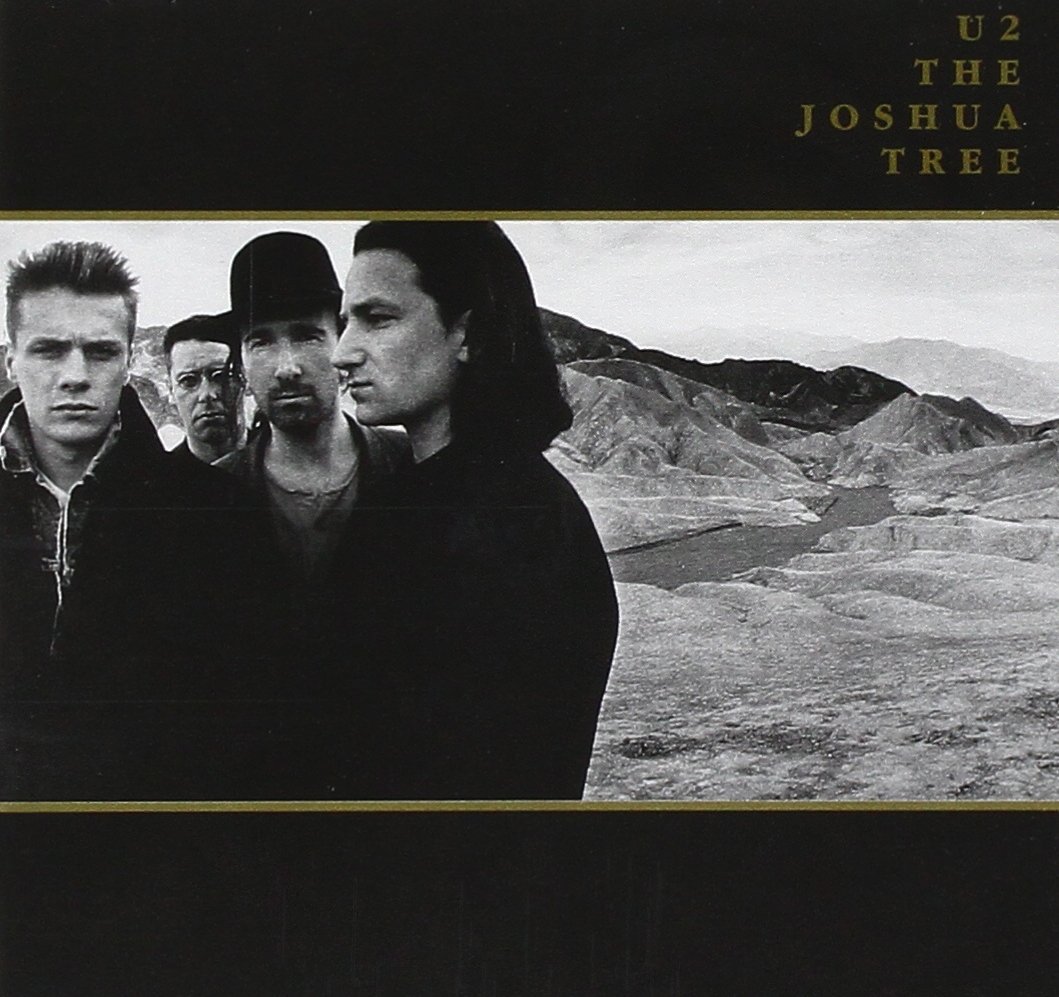
Think about the music that you listened to 30 years ago. How much of it holds up? I’d venture to guess that only a select handful of songs and artists could withstand that test. Maybe this is the fact that they made such a strong impression on me in my childhood. Maybe it’s the combination of style and substance. Maybe it’s the Anton Corbijn album cover, making the band look like dramatic leads in some post-Kurosawa, proto-Tarantino picture. Truthfully, it’s about a feeling that it gives me. After all, isn’t that what music is all about? Today, nearly 29 years later, dropping the needle on the first track of the first side, I still get those tingles up my spine.